
Changing Your Path
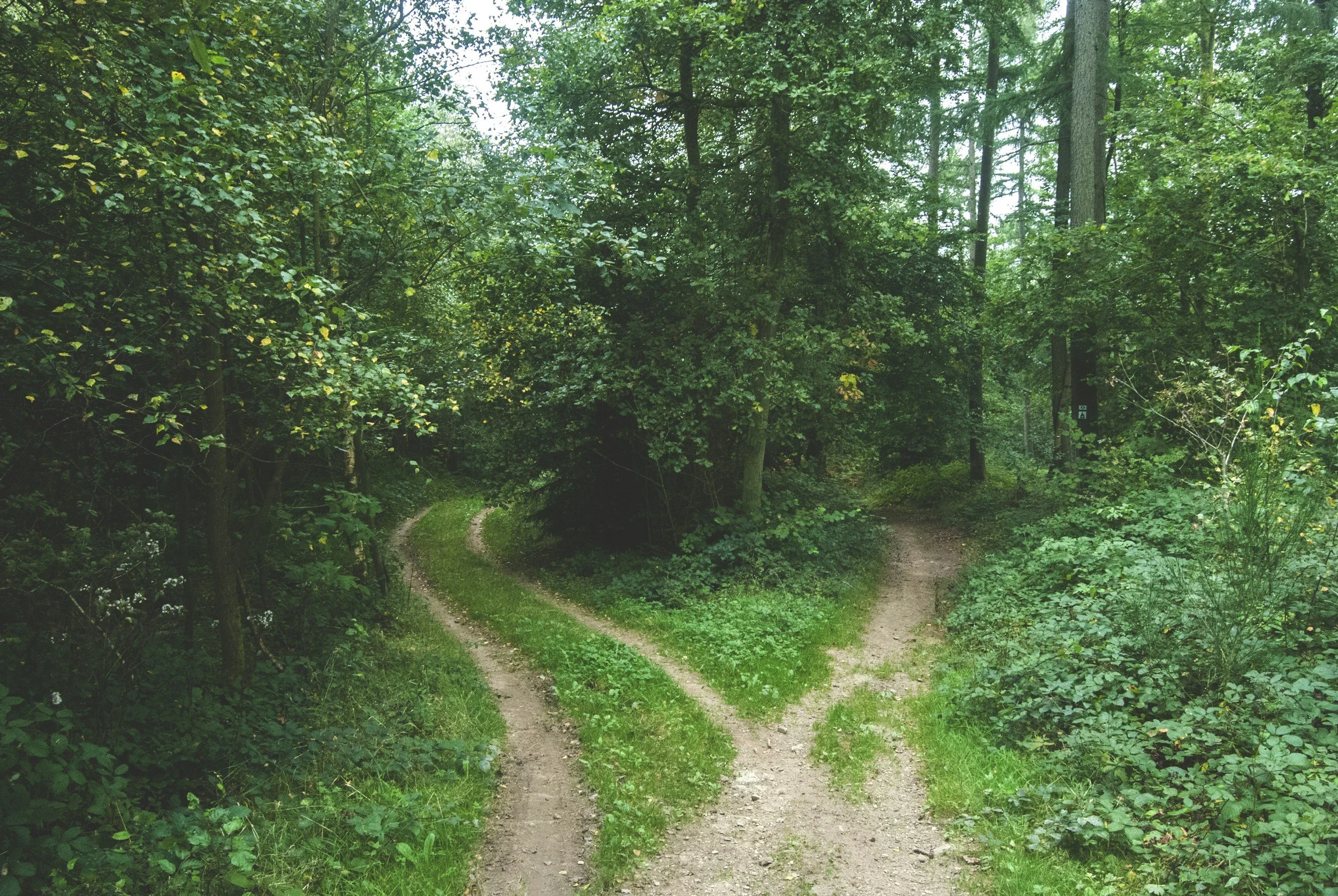
TL:DR - 1) Change is the culmination of working through the dilemma of acceptance vs authenticity and identity questions because it moves us from abstract contemplation to concrete action. 2) Yet change can still be emotionally and psychologically daunting, as remapping one's life can be the most difficult task we ever attempt. 3) But the process does not have to be a torturous grind if we can be led by values and give ourselves patience and kindness, allowing time for the brain and nervous system time to rewire by feeding it with slow-moving influences that don't assault the mind but allow it to expand, such as nature, creativity, art, music, and movement.
Connecting the Dots of Change
Just as we saw with the topic of identity, much can be said, and has already been said by people much smarter than me, about the topic of change, more than I can cover here. So I want to focus on the connection between acceptance vs authenticity, identity, and change as it relates to your path in life. The dilemma between acceptance vs authenticity alerts us to the need to better understand our identity and how to create a more flexible and integrated Self able to adapt to life's many challenges. This awareness is similar to pausing on one's path and considering where you have been and where you are going. But the process does not end with abstract contemplation and instead asks us to take concrete action in the form of change, to move forward on that path and possibly create a new one. Evaluating your past decisions and actions is important, as is understanding who you are and who you want to be, but the culmination of those adjustments and fine tuning of your understanding is to live again, to shift from theoretical to actual, to perform rather than just rehearse.
Seen this way, change becomes the solution to identity because we support who we are with what we do, further solidifying and deepening that new sense of Self, and as we strengthen our identity, that expanded Self discovers additional aspects of ourselves and avenues for change, creating a positive and sustainable reinforcement of our path in life.
Some Practical Advice to Put into Practice
Of course, once again this sounds nice but is much easier said than done. And I agree. I said it at the end of the identity exploration but it's worth repeating: remapping one's life might be the most difficult task we undertake as human beings. Change can be scary and even paralyzing. It alters your future expectations and hopes, challenges your understanding of yourself and your life, and asks much of you on deep emotional and psychological levels. This can be especially true when dealing with seemingly unconquerable obstacles, such as self-hatred, crippling doubt or fear, feelings of being unworthy, religious or childhood trauma, mental or physical health issues, anxiety over social perception, and a lack of agency in the face of systems of oppression. I plan to write additional deeper dives on these obstacles but don't pretend to think that a few essays is sufficient to counter these problems. They're real. And they require courage, community, therapy, and agents of social change. But I hope that some of the below advice will help you move from feeling overwhelmed and paralyzed to seeing that change is possible.
Don't get stuck waiting for perfection. This is a common issue for many, including myself. Making change can seem so monumental that we don't want to take any step forward until we have a fully worked out plan with solutions for all possible contingencies. That plan is impossible. Scrap it.
INSTEAD...Let exploration guide you, be open and curious, and accept small steps forward. Yes yes, I know that I bring up exploration a lot, but I really do believe it's an important counter to so many of the messages we are constantly bombarded with in modern society. We hear nothing but productivity, efficiency, and optimization. So we internalize those messages and apply it to our own lives, trying to become more like machines than human beings. Exploration reminds us to go slow, to embrace openness and curiosity, to prioritize our mental and emotional health above external outcomes, to value natural growth above productivity. I named this life coaching business Just Feet Ahead because I truly believe that you never know what's just around the next bend, but I know you can't get there without moving forward, even if it's just a small step, one at a time. It's also why I encourage creative outlets that allow space for exploration, curiosity, self-expression, and big-picture thinking.
Don't expect change to happen all at once or believe it has to be a grind. We often imagine that making changes in our lives will be an awful experience, one that requires us to grit our teeth and get to work, sweating and grinding it out the whole way through. But change doesn't have to be that way, and that mindset only encourages fear and procrastination, or reinforces the above belief that we shouldn't start until we have a perfect plan in place.
INSTEAD...Break the challenge into smaller pieces and give yourself time. Most significant changes not only take time but often occur when we're not even paying attention. Therapists like to discuss the Transtheoretical Model of Change, which examines the movement from resistance to change through precontemplation all the way to contemplation and eventual concrete action. What I see most often in others' lives and in my own is the deep work of the unconscious, gently nudging us toward change, sometimes through dreams, sudden breakthroughs, or unexpected impulses. This is another reason I strongly advocate for creative exercises when seeking change. Whatever your approach, whether a planner or a creative type, give yourself time. We don't learn to walk, talk, or read overnight; we just keep trying, allowing the brain to rewire itself. You can encourage that work by feeding your mind with slow-moving things, such as nature, art, music, creative work, and movement. I also think a lesson from long distance running is helpful: just make it to the next aid station. No marathon or ultra marathon runner thinks about the entire 20+ miles remaining. Instead, they break the distance into smaller chunks and look forward to the water, electrolytes, cookies, chips, and PB&Js waiting for them at the next aid station. Then they make it to the one after, and at some point, you're at the finish line. Yes, you can do hard things. But don't make it harder by trying to do the whole thing all in one sitting.
Don't rely on insight alone. Many people experience what therapists call "high insight, low change," which is when an individual intellectually knows their problem and can explain it brilliantly, maybe even give a TED Talk about it. And yet they don't change but stay stuck repeating the same behavior over and over. The problem is that our understanding exists in one part of the brain, but our nervous system, habits, and deeply held beliefs operate in another. This is why AI isn't very useful for solving our problems. It offers insight alone, and all the quick-fix life hacks just don't hack it when you're trying to create significant, lasting change in your life.
INSTEAD...Move from knowledge to embodied wisdom. Don't stop at intellectual understanding. That's a great place to be on the path toward change, but there are many more stops along the route that must be passed before arriving at your desired change destination. Your body must know and internalize the intellectual lesson. Your nervous system and brain must be given safety and time to rewire. So again, be patient and give yourself time. Start with the smallest version of The Thing and let yourself experience what it feels like to change, even if slowly and almost imperceptibly. This will help you move from abstract knowledge to embodied wisdom, leading to the inner strength and courage necessary to continue moving forward.
Don't be afraid of big "C" change. Often when trauma is discussed, people will distinguish between "small" and "big T" traumas. While I don't think trauma comparison is helpful, there is some benefit in helping people realize that they might have experienced a lot of mini traumas, ones they discredit because they aren't the "more significant" traumas such as PTSD, abuse, or grief, but ones that nevertheless have had a significant impact on their life and should be taken seriously. When it comes to change, we almost do the opposite. We seek the smallest changes possible, afraid of taking on the larger task. But sometimes significant change is needed, rather than waste time with minor tweaks to our engine when a new engine is required. Don't run away from that possibility.
THAT SAID...Small changes often add up to significant ones, so don't rush things. In taking a deeper dive into my INFJ personality type, I learned that INFJs often react to disappointments in life by burning it all down and starting over, whether a career, a relationship, a big project, etc. I myself have done this. Sometimes it's necessary, sometimes it's an overreaction. Just as sometimes a "big C" change is needed, sometimes smaller changes are needed that add up to something more significant. So before you light the match, see what's worth salvaging and consider what you want the replacement thing to look like. If all you needed was a bathroom remodel, don't set fire to the whole house.
A former boss of mine had a sticky note on her computer that read: "The hell of changing is better than the hell of not changing." I agree with that sentiment. Change can be difficult, but remaining stuck is almost a kind of death as we remain in circular loops, never going forward or growing. As you go through changes in your own life, don't get bogged down in theoretical abstractions, just like we covered when discussing identity. Instead, use the values you discovered in your identity exploration to guide you. Identify the barriers in your way and allow time to work around - or through - them. Don't be surprised when the acceptance vs authenticity dilemma rears up again. Be aware of it, accept it, and keep moving. At each stage we choose growth or stagnation, and the hero's journey takes courage. But don't expect your version of the "hero" to look god-like, or a legend like the Buddha, or the GOAT like Michael Jordan. Those expectations aren't realistic or helpful. But the flip side is that becoming the hero of your own life removes that immense pressure to be great or awesome and means that it’s available to everyone, not just some elite group of superhumans.